

When bats establish roosts in residential attics, commercial warehouses, or institutional buildings across Vaughan, the most reliable solution is engaging a licensed wildlife control company. Unlike opportunistic pest treatments, professional removal requires a specialized approach that blends humane exclusion techniques, regulatory compliance, and long-term structural prevention.
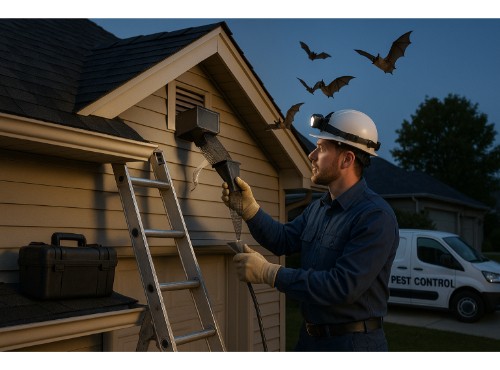



| Service Type | Description | Average Cost Range (Vaughan) | Timeline |
|---|---|---|---|
| Inspection & Assessment | Comprehensive evaluation of attic, soffits, chimneys, and rooflines; includes guano identification and entry point mapping. | $150 – $350 | Same day to 1 week |
| Exclusion (One-Way Doors) | Installation of bat valves that allow exit but prevent re-entry, timed after maternity season (August onward). | $400 – $1,200 depending on number of entry points | 2-4 weeks |
| Guano Cleanup & Sanitation | Safe removal of droppings and contaminated insulation; prevents histoplasmosis risks. | $600 – $2,500 (size-dependent) | 1-3 days |
| Sealing & Proofing | Permanent closure of gaps in rooflines, vents, chimneys, and siding using bat-safe materials. | $300 – $1,000+ | 1-2 days |
| Commercial Contracts | Larger-scale exclusion projects for facilities like Vaughan Mills Mall or industrial warehouses near Highway 407. | Custom quote (can exceed $10,000) | Phased projects, weeks to months |
Note: Prices vary depending on building size, number of access points, and level of guano contamination. Emergency calls for example, when a bat is flying inside a bedroom may incur premium fees.
Humane Removal: Ontario regulations prohibit killing bats. Reputable Vaughan companies use one-way exclusion devices instead of poisons or lethal traps.
Seasonal Timing: Exclusions cannot legally or ethically be done during maternity season (May – July), when young bats are flightless. Most professional services schedule major sealing after August.
Safety Protocols: Technicians wear respirators, Tyvek suits, and follow Ministry of Health guidelines when cleaning guano.
Documentation: Clients typically receive a written service report, photos of entry points, and warranty options for sealed work (often 1–5 years).
Emergency Response: For bats inside living areas, licensed specialists provide 24/7 response across Vaughan’s neighbourhoods – ranging from Woodbridge basements to new condo towers near the Vaughan Metropolitan Centre.
Professional bat removal is not a quick spray-and-go service. It requires knowledge of bat ecology, construction practices, and health safety protocols. By partnering with certified wildlife technicians, property owners gain peace of mind knowing both the building and its occupants are protected.
Bat control in Vaughan must balance public health, structural protection, and wildlife conservation. Unlike general pest treatments, removal efforts require careful timing and adherence to provincial regulations.
Bats in Ontario – primarily the big brown bat (Eptesicus fuscus) and little brown myotis (Myotis lucifugus) – follow seasonal cycles that directly influence when exclusion is possible:
| Season | Bat Behaviour | Implications |
|---|---|---|
| Spring (April – May) | Bats emerge from hibernation and re-establish roosts. | Inspections are ideal. Permanent sealing should be delayed until maternity season ends. |
| Summer (June – July) | Females form maternity colonies; young are flightless. | Exclusions are not permitted – blocking access would trap pups inside, leading to mortality and property odor issues. |
| Late Summer – Early Fall (August – September) | Juveniles begin flying; colonies remain active in attics and chimneys. | Prime season for exclusion work. One-way doors and sealing can be safely installed. |
| Fall (October – November) | Bats migrate or enter hibernation in caves or deep structures. | Late-season sealing can be completed, but guano cleanup should follow strict PPE protocols. |
| Winter (December – March) | Most bats hibernate outside of homes, but small groups may remain in attics. | Exclusion is rarely needed; winter inspections help identify roost signs for spring planning. |
Comprehensive Inspection
Identify entry points (soffits, ridge vents, chimneys, fascia gaps).
Confirm bat presence with guano deposits, staining, or direct sightings.
One-Way Exclusion Devices
Install bat valves or tubes that allow bats to exit at dusk but prevent re-entry.
Leave devices in place for a minimum of 5–7 nights of clear weather.
Post-Exclusion Sealing
Permanently close all identified gaps with caulking, flashing, or mesh.
Focus on rooflines, attic vents, and utility penetrations – common access points in Vaughan homes.
Guano Remediation
Remove droppings using HEPA-filtered vacuums and protective suits.
Replace contaminated insulation to reduce histoplasmosis risk.
Professional Oversight
Ontario law prohibits killing bats; only licensed wildlife removal specialists are permitted to carry out large-scale exclusions.
Documentation and warranties are industry best practice for Vaughan service providers.
Urban Growth Pressure: Rapid development in Maple and Vellore Village has reduced natural bat roosting habitats, leading to increased attic intrusions.
Attraction to Older Structures: Historic properties in Kleinburg and Woodbridge with clay-tile roofs, chimneys, and exposed beams are particularly vulnerable.
Community Awareness: Public spaces like the Kortright Centre for Conservation actively promote bat conservation, reinforcing the need for non-lethal management in surrounding residential zones.
Following these best practices not only resolves infestations but also maintains Vaughan’s ecological balance. Proper timing ensures bats are excluded safely without violating conservation regulations or creating secondary health hazards.
While professional wildlife control companies in Vaughan handle the majority of bat infestations, many homeowners first attempt DIY approaches. Although full-scale exclusion is best left to licensed specialists, there are safe measures residents can take to reduce risks and prepare their property.
Confirm the Presence of Bats
Look for guano (droppings) along attic floors, windowsills, or near chimneys.
Listen for scratching or high-pitched squeaking at dusk or dawn.
Use a flashlight at night near rooflines to spot emerging bats.
Seal Non-Active Gaps Early
During spring or late fall, seal small cracks in soffits, vents, or fascia boards that are not actively used by bats.
Use durable caulking, mesh screening, or hardware cloth.
Install Chimney Caps and Vent Covers
Metal chimney caps prevent bats and other wildlife (squirrels, raccoons) from entering.
Secure dryer vents, bathroom exhaust vents, and attic vents with wildlife-proof covers.
Encourage Natural Deterrents
Keep exterior lights on near suspected roosting sites (many bats avoid well-lit areas).
Trim overhanging branches close to rooflines, especially in Woodbridge and Maple neighbourhoods with mature tree canopies.
Maintain Attic Sanitation
Store items in sealed bins, not cardboard, which absorbs guano odors.
Regularly inspect insulation for staining or contamination.
Avoid Handling Bats Directly: Even a small bite can transmit rabies. Vaughan residents should call York Region Public Health immediately if contact occurs.
Do Not Use Poisons or Repellents: Chemical products are illegal for bats in Ontario and often trap animals inside walls.
Respect Timing Restrictions: Never seal entry points in June or July, when flightless pups are present. Premature sealing results in dead bats inside the structure, creating odor and health hazards.
Protective Equipment: If cleaning small amounts of guano, wear an N95 respirator, disposable gloves, and eye protection. For heavy contamination, hire a professional crew with HEPA systems.
Many homeowners in Vaughan Mills, Kleinburg, or near Highway 7 corridors attempt exclusion but overlook hidden entry points such as ridge vents, soffit junctions, or warped fascia boards. Since bats only need a gap the width of a dime to enter, even one missed opening can make DIY efforts fail.
For infestations involving large colonies, commercial buildings, or extensive guano accumulation, calling a professional wildlife control company is the only effective solution.
In the summer of 2023, a family living in the Pine Grove neighbourhood of Vaughan, just east of Islington Avenue and Langstaff Road, contacted a local wildlife control company after experiencing unusual noises at night. They reported fluttering and squeaking sounds coming from the attic and noticed small black droppings accumulating on their back deck.
The inspection revealed:
Entry Points: Gaps along the soffit–roofline junction and an uncapped chimney.
Colony Size: Approximately 60–80 big brown bats (Eptesicus fuscus), one of Ontario’s most common attic-dwelling species.
Evidence: Guano deposits along attic beams, staining near the entry points, and a strong musky odor.
The attic’s warm, sheltered environment made it an ideal roost, especially during Vaughan’s humid summer months. The presence of flightless pups in July confirmed the site was an active maternity colony.
Because Ontario regulations prohibit exclusions during maternity season, the technician advised the homeowners to wait until late August. In the meantime, temporary monitoring measures were put in place:
Observation Logs: Residents tracked bat flight activity at dusk to confirm roosting patterns.
Guano Containment: Plastic sheeting was installed to prevent further contamination of stored belongings.
Health Advisory: Homeowners were cautioned about histoplasmosis risk and instructed not to disturb droppings.
In September 2023, once the juveniles were flying, the exclusion process began:
One-Way Bat Valves were installed at the main soffit gap and chimney flue.
Secondary Sealing was performed on smaller cracks near the fascia and attic vents.
Post-Exclusion Sanitation: Technicians removed roughly 120 kilograms of guano-contaminated insulation using HEPA vacuums and replaced it with fresh insulation.
Final Proofing: Stainless steel mesh and weather-resistant caulking ensured no future re-entry.
Within five nights, all bats had exited the structure through the one-way devices.
A follow-up inspection two weeks later confirmed the colony had permanently relocated.
The family reported immediate improvements in indoor air quality and elimination of nightly noises.
Key Lessons for Vaughan Residents:
Pine Grove and neighbouring Woodbridge homes, many of which have mature trees and older rooflines, are high-risk zones for bat activity.
Timing is critical – removal must wait until pups are volant.
Guano cleanup is as important as exclusion; leaving contaminated insulation poses long-term health risks.
This case underscores how professional, humane exclusion methods safeguard both residents and bat populations while addressing structural and health concerns unique to Vaughan’s residential communities.
Once bats are safely excluded from a property, long-term prevention is the only way to ensure they don’t return. Vaughan homes and businesses – especially in neighbourhoods such as Woodbridge, Maple, Kleinburg, and Vellore Village – often have construction features that create entry points over time. Preventative work is as important as the initial removal.
| Measure | Description | Application in Vaughan Properties |
|---|---|---|
| Comprehensive Sealing | Close all cracks and gaps larger than 1 cm using caulk, flashing, or mesh. | Essential in older Kleinburg homes with aging soffits and fascia boards. |
| Chimney & Vent Proofing | Install stainless steel chimney caps and wildlife-proof vent covers. | Especially relevant in Woodbridge, where many homes still rely on open masonry chimneys. |
| Roofline Maintenance | Inspect ridge vents, gable ends, and roof junctions twice per year. | Important for properties near the Highway 7 corridor, where rapid construction can leave gaps unsealed. |
| Attic Ventilation Upgrades | Replace damaged attic screens with bat-resistant mesh. | Recommended for suburban developments in Maple and Vellore Village. |
| Guano Monitoring | Conduct annual attic checks for new droppings or staining. | Prevents infestations from going unnoticed in large multi-level houses. |
Vaughan’s dense mix of residential and commercial zones means bat prevention also requires community-level awareness:
Neighbourhood Education: In Sonoma Heights and Pine Grove, community associations have circulated information sheets on sealing homes before maternity season.
Public Facilities: Parks such as Boyd Conservation Area and Kortright Centre for Conservation are bat-rich habitats. Homeowners living nearby must remain especially vigilant about potential attic roosts.
Commercial Settings: Retail and warehousing spaces along Highway 400 and 407 benefit from routine inspections of loading docks, rooflines, and storage areas.
Spring (April-May): Schedule roof and attic inspections before maternity colonies establish.
Summer (June-July): Avoid exclusion; instead, monitor activity for later proofing.
Late Summer-Fall (August–October): Complete all exclusion and sealing work after pups can fly.
Winter (December–March): Conduct guano remediation or insulation replacement projects when bats are absent.
A single overlooked gap can undo an entire removal effort. By investing in prevention, Vaughan homeowners not only protect property value but also reduce health risks associated with rabies exposure and histoplasmosis. Commercial operators, from Vaughan Mills Mall to local restaurants near Rutherford Road, also avoid costly disruptions and regulatory citations by keeping their facilities bat-free year-round.
With more than two decades of experience in pest management across the Greater Toronto Area, Naeem Choudhry has built a reputation for effective solutions and trusted service. He combines practical field knowledge with a strong commitment to customer satisfaction, often guiding homeowners and businesses on prevention, inspection, and treatment strategies. Naeem is an active participant in professional associations and regularly contributes his expertise through published articles and community workshops.
For more, follow him on x.com.

At Maple Pest Control, we believe in building long-term relationships based on trust, integrity, and a commitment to complete customer satisfaction.
We’re more than just a service provider, we’re your trusted partner in maintaining a healthy environment.